
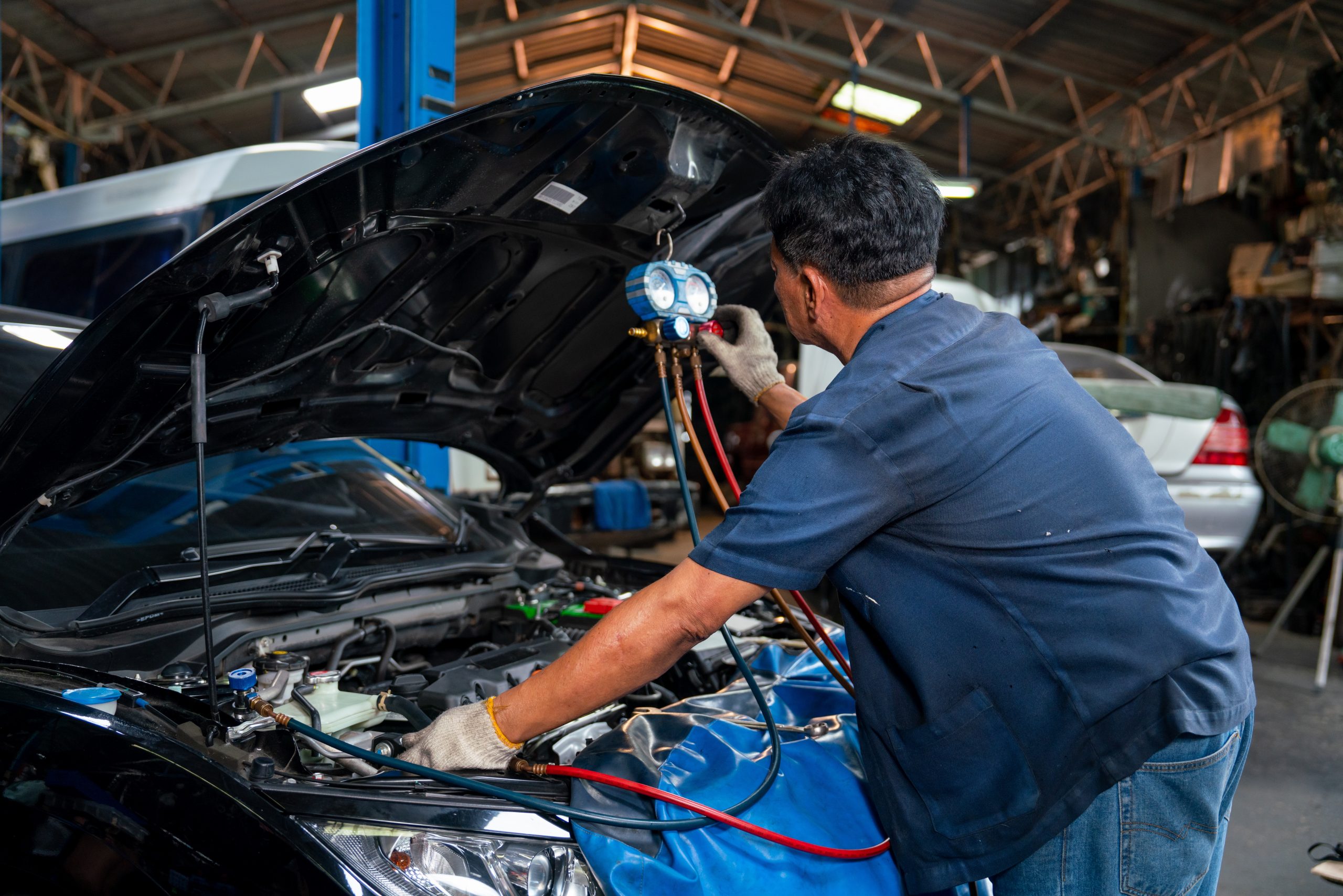
Airdrie Automotive Services Ltd. gets a surge of calls every first cold snap about the tire pressure light that glows on the dash. The light often appears overnight, and it can feel alarming when the tires look fine. Cold air shrinks the air inside your tires, so the pressure drops without any puncture. This guide explains why the warning appears, how to tell a harmless dip from a real leak, and what to do before you drive off.
Why the Tire Pressure Light Comes On When Temperatures Fall
Air contracts as it cools. As a rule of thumb, tire pressure drops about 1 psi (roughly 7 kPa) for every 5 to 6°C of temperature drop. That is an industry estimate, and it varies a little by tire and vehicle.
Airdrie can swing 20°C or more between an afternoon and the following morning in late fall. A tire that sat at the correct pressure on Tuesday can sit several psi low by Wednesday. Many vehicles trigger the warning when a tire falls roughly 25% below the pressure on the door-jamb placard.
The overnight effect
Parked outside, your tires lose heat all night. The sensor reads the cold pressure at start-up, and the light comes on. Driving warms the tires, and the light sometimes goes out after a few kilometres. A light that returns every cold morning still needs attention, because your tires are running underinflated.
The slow leak you could be missing
Cold weather also exposes leaks that stayed hidden in summer. A worn valve stem, a corroded wheel rim edge, or a small nail can leak slowly. The temperature drop then pushes a marginal tire past the warning threshold. That is why the light can feel sudden even though the problem started weeks earlier.
Steady Light, Flashing Light: What Each Tire Pressure Light Pattern Means
The way the light behaves tells you a lot. Learn the difference before you decide how urgent the situation is.
- Steady light: One or more tires are low on pressure. Check all four, plus the spare if your vehicle has a monitored one.
- Flashing, then steady: The monitoring system itself has a fault. A dead sensor battery, a damaged sensor, or a module issue can cause this.
- Light returns after you inflate the tires: Suspect a slow leak, a failing sensor, or a system that needs a reset after the inflation.
A flashing light does not mean your tires are safe. The system cannot warn you about low pressure while it is faulty. Treat it as a reminder to check each tire with a hand gauge.
How to Check and Set Your Tire Pressure at Home
You need a quality pressure gauge and access to an air supply. Check pressure when the tires are cold, which means the vehicle has sat for at least three hours or has rolled less than two kilometres.
Step-by-step method
1. Find the recommended pressure on the placard inside the driver’s door jamb. Do not use the number moulded into the tire sidewall. That figure is the maximum, not the target.
2. Unscrew the valve cap and press the gauge firmly onto the stem.
3. Compare the reading with the placard and add air in short bursts.
4. Recheck, refit the caps, and repeat for each tire.
5. Drive for a few minutes and see whether the light clears.
If you inflate at a warm gas station and drive home into the cold, the pressure will fall again. Set it a little at a time, and recheck after the first cold night.
Common mistakes
Drivers often inflate to the sidewall maximum. That leaves the tire overinflated, reduces the contact patch, and wears the centre of the tread. Others ignore the spare. A flat spare is a poor surprise on a winter roadside.
Symptom, Likely Cause, and Next Step
Use this table to sort out what your dash is telling you.
| What you notice | Likely cause | Sensible next step |
|---|---|---|
| Light on after a cold night, gone after driving | Normal pressure drop from cold air | Top up all tires to the placard value |
| Light returns within a day or two of inflating | Slow leak at the valve, rim, or tread | Have the tire inspected on a wheel balancer or in water |
| Light flashes for about a minute at start-up, then stays on | Sensor or monitoring system fault | Book a scan of the system |
| One tire keeps losing pressure, others hold steady | Puncture, bead leak, or bad valve stem | Have that tire removed and checked |
| Light on right after a tire swap | Sensor not relearned or damaged during the swap | Return for a sensor relearn |
Seasonal Tire Swaps and Sensor Trouble
The switch to winter tires is a common moment for tire pressure light problems. If your winter wheels carry their own sensors, each one has an internal battery. Those batteries are sealed in, and many last somewhere between 5 and 10 years. When one dies, the light flashes and your system loses its ability to protect you.
A technician may also need to run a relearn procedure so the vehicle recognizes the sensor positions. Skipping that step leaves the light on even though the pressures are perfect. Our team can talk you through what your vehicle needs when you book a seasonal change.
Rotation and sensor position
After a rotation, some vehicles need a relearn so the dash can tell you which tire is low. Others find the positions on their own after a short drive. Check your owner’s manual, and ask us if the information is missing.
When Low Pressure Is a Safety Problem, Not an Annoyance
Underinflated tires flex more, build up heat, and wear faster on the outer edges. They also lengthen braking distances and make steering feel vague, which matters on icy Airdrie roads. Fuel economy suffers too, since a soft tire resists rolling.
Stop and inspect your tires right away if you notice any of these signs:
- A visible bulge or crack in the sidewall
- A tire that looks flat against the ground
- A hissing sound from a wheel
- A steering wheel that pulls hard to one side
Our guide to reading uneven tire wear patterns shows how chronic low pressure leaves marks you can spot yourself. For seasonal planning, see these tips on preparing for sudden Alberta temperature swings.
What Our Technicians Do When You Bring the Vehicle In
We start with the basics. We measure each tire cold, check the placard value, and look for visible damage. We then inspect valves, rims, and tread for the source of any leak.
If the pressures hold but the light stays on, we scan the monitoring system and read the sensor data. That shows which sensor has failed and whether the fault is in a single wheel or in the module. You get a clear explanation of the findings before any work begins, and an honest quote is given after assessment.
Our tire service page lists the tire work we handle. You can also read the national guidance from Car Care Canada on routine tire checks and seasonal habits.
Frequently Asked Questions
Is it safe to drive with the tire pressure light on?
It depends on the tire. If the pressure is only slightly low from cold air, a short drive to add air is usually fine. If a tire looks flat or the car pulls to one side, stop and get help.
Why does the light go out after I drive a bit?
Driving warms the tires and raises the pressure slightly. That can lift a borderline tire above the warning threshold. The tire is still underinflated, so top it up.
Can I ignore a flashing tire pressure light?
No. A flashing light means the monitoring system has a fault. Your tires may be fine, but you lose the early warning until someone repairs the system.
Do I need to check pressure if the light is off?
Yes. The warning usually triggers only when a tire is well below target. A monthly hand-gauge check catches smaller losses earlier.
Contact Airdrie Automotive Services Ltd.
If your dash keeps warning you about tire pressure, bring the vehicle in for an inspection.
- Phone: 403-912-0608
- Address: 79 East Lake Cir NE, Airdrie, AB T4A 2J6
- Hours: Monday to Thursday 7:30am to 5:00pm, Friday 7:30am to 12:00pm