
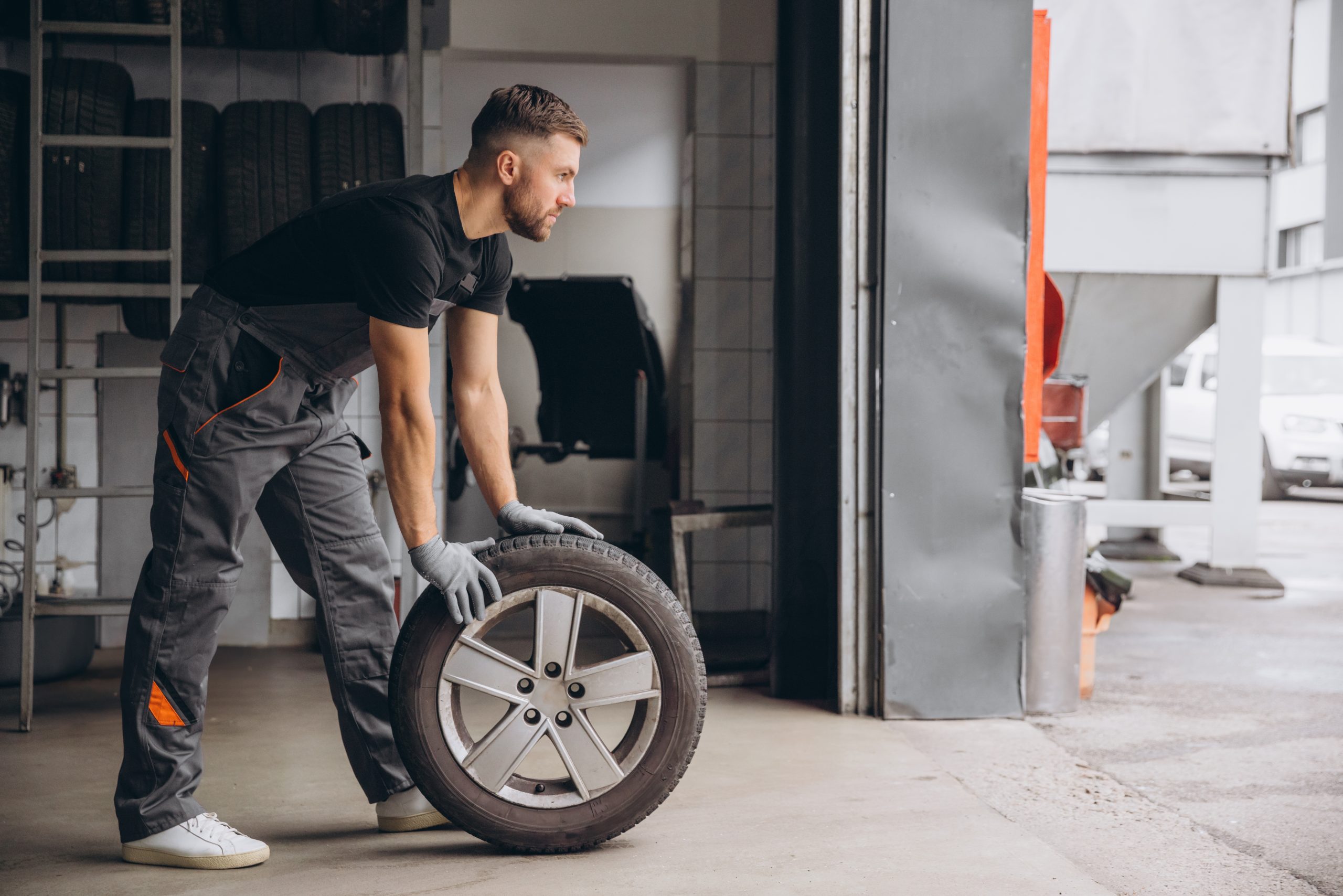
Your tires speak a language most drivers never learn to read. Specifically, the way rubber wears across the tread reveals exactly what is happening with your suspension, alignment, inflation, and driving habits. Consequently, understanding those patterns saves you money and keeps you safe — especially at highway speeds this summer.
Centre Wear: Too Much Air
When the centre of the tread wears faster than the outer edges, your tires are overinflated. Specifically, overinflated tires balloon outward in the middle, causing only the centre strip to contact the road. Therefore, less surface area grips the pavement, reducing traction. Furthermore, overinflated tires ride harsher and are more susceptible to impact damage from potholes and road debris.
Fix this by checking your inflation pressure against the manufacturer’s recommendation — found on the sticker inside your driver’s door frame, not on the tire sidewall. Airdrie Automotive Services includes pressure checks with every tire service in Airdrie appointment.
Edge Wear: Not Enough Air
The opposite of centre wear is edge wear, where both outer shoulders wear down faster than the middle. This classic pattern signals underinflation. When tires run low, the sidewalls flex excessively and the edges bear most of the load. Additionally, underinflated tires build up heat faster, which accelerates rubber breakdown and dramatically increases the risk of a blowout.
Check your tire pressure monthly, especially during summer when heat can cause pressure to fluctuate noticeably. Never use the “kick test” — you cannot feel underinflation by pushing a tire with your foot.
One-Sided Wear: An Alignment or Suspension Problem
Single-shoulder wear — where only the inner or outer edge of one tire wears down — almost always points to an alignment issue or worn suspension components. Specifically, camber misalignment tilts the top of the tire inward or outward, grinding one edge into the road on every kilometre you drive. Furthermore, worn ball joints, control arm bushings, or tie rod ends cause the same pattern.
This type of wear does not fix itself with an inflation adjustment. In fact, continuing to drive on a misaligned vehicle accelerates tire wear and puts stress on every steering component. A suspension and alignment check from a certified technician identifies the root cause and stops the damage from compounding.
Patchy or Cupped Wear: Bounce and Vibration
Scalloped or cupped tread — where the tire looks like it has scooped-out patches around the circumference — indicates a worn or leaking shock absorber or strut. Specifically, a weak shock absorber lets the tire bounce on the road surface instead of staying in firm contact. As a result, the tire hammers the pavement in a rhythmic pattern, creating the cupped appearance.
Cupped tires cause vibration at highway speeds that most drivers feel through the steering wheel or seat. Additionally, they reduce braking effectiveness because the tire cannot maintain consistent road contact. Airdrie Automotive Services technicians check shock and strut condition as part of every regular vehicle maintenance appointment.
Feathering: A Toe Alignment Issue
Feathering appears when the tread blocks on one side of each rib wear at a rounded angle while the other side stays sharp. Run your hand across the tread — it feels smooth in one direction and sharp in the other. This pattern points directly to a toe alignment problem. Specifically, toe misalignment means the tires point slightly inward or outward instead of straight ahead, causing the rubber to scrub sideways on every rotation.
This type of misalignment also strains your steering rack. Therefore, fixing the alignment protects both the tires and the steering components simultaneously.
Diagonal Wear or Cross-Diagonal Patches
If you see diagonal wear patches running across the tread at an angle, the most common culprits are infrequent tire rotations or a worn wheel bearing. Furthermore, a sticking brake caliper can also create diagonal or uneven patch wear on a single tire. A brake inspection will confirm whether a seized caliper is responsible. Rotating tires every 10,000 to 12,000 kilometres prevents diagonal wear from developing in the first place.
What to Do When You Spot a Pattern
First, do not assume buying new tires solves the problem. New tires on a misaligned or worn suspension wear down just as fast as the old ones. Fix the root cause first, then replace the tires. Second, bring your vehicle to Airdrie Automotive Services for a full inspection. The team reads wear patterns diagnostically and works backward to find the mechanical issue causing them.
Additionally, if your vehicle is due for an automotive AC service at the same time, combining appointments makes the whole visit more efficient. Airdrie Automotive Services tracks your vehicle’s full service history and flags anything overdue so nothing gets missed.
Frequently Asked Questions
Q: Can I rotate my own tires to even out wear? A: You can if you have the proper jack stands and torque wrench. However, rotation alone does not fix alignment, inflation, or suspension problems. It only moves worn tires to positions where the wear matters less.
Q: How quickly does misalignment destroy a tire? A: It depends on the severity. However, significant camber misalignment can wear through a tire’s tread completely within 10,000 to 15,000 kilometres — far faster than normal wear.
Q: Do all four tires need to match for even wear? A: Yes. Mismatched tires with different tread depths cause uneven load distribution, which strains the differential and transmission in AWD and 4WD vehicles.
Q: Is it safe to drive on tires with cupping? A: Not ideal. Cupped tires vibrate, reduce grip, and extend stopping distances. Replace the worn shocks or struts along with the tires to prevent the pattern from recurring.
Q: Can a wheel alignment fix one-sided wear that already happened? A: An alignment stops further uneven wear but cannot restore tread that is already gone. If the shoulder is significantly lower than the rest of the tread, replacement is likely the next step.