
Airdrie Automotive Services regularly reminds drivers that wheel alignment in Airdrie deserves more attention than it usually gets. This is especially true after a hard pothole hit or a curb scrape in a parking lot. A misaligned vehicle doesn’t always announce itself with a warning light. It quietly wears down tires, strains suspension parts, and makes the car pull in ways that add fatigue to every drive.
This guide explains what alignment actually adjusts and the signs that indicate it’s off. It also covers why Airdrie’s road conditions make this a more frequent concern than many drivers expect.
Why Wheel Alignment in Airdrie Deserves Regular Attention
Alberta’s road surfaces change dramatically between seasons. Each transition puts new stress on suspension and steering components that hold alignment angles in place. A vehicle perfectly aligned in the fall can drift out of spec by spring after a winter of frost heaves and pothole impacts.
The change often happens gradually. Drivers adapt to a slight pull or a crooked steering wheel without realizing how much it’s affecting tire wear and handling. Scheduling a check periodically, rather than waiting for an obvious symptom, catches the drift before it gets costly for tires.
What Wheel Alignment Actually Adjusts
Alignment refers to the angles at which a vehicle’s wheels meet the road. Three main measurements describe it: camber, caster, and toe. These angles are set at the factory to keep tires wearing evenly and the vehicle tracking straight. They shift over time from normal driving, road impacts, and worn suspension components.
Even a small deviation in these angles can cause noticeable handling changes. A vehicle out of alignment might drift to one side on a flat, straight road. The steering wheel might sit crooked even when driving straight ahead.
Signs Your Vehicle Needs an Alignment
| Sign | What’s Happening | Why It Matters |
|---|---|---|
| Car pulls to one side | Uneven toe or camber angle | Increases tire wear and steering effort |
| Steering wheel off-center when driving straight | Toe angle out of spec | Makes the car harder to control precisely |
| Uneven or rapid tire wear | Camber or toe misalignment | Shortens tire lifespan significantly |
| Vibration at highway speed | Alignment or tire balance issue | Can indicate a deeper suspension concern |
| Squealing tires on turns | Excessive camber wear pattern | Points to alignment or worn suspension parts |
What Causes Alignment to Shift
Alberta’s road conditions are particularly tough on alignment. Potholes that appear after freeze-thaw cycles deliver sudden impacts. Frost heaves in spring and gravel shoulders around newer Airdrie developments do too, and any of these can knock a wheel out of spec. Curb strikes while parking and driving with underinflated tires also contribute, since both put uneven stress on suspension components over time.
Worn suspension parts can cause alignment to drift even without a specific impact event. This includes tie rod ends, ball joints, and bushings. That’s one reason we often check suspension and steering components at the same time as an alignment.
How an Alignment Check Works
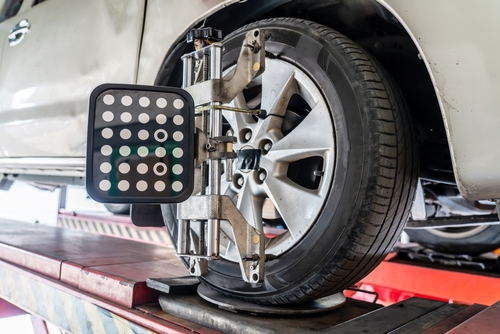
A modern alignment check uses sensors mounted on each wheel. They measure camber, caster, and toe against the manufacturer’s specifications. Our technicians compare the readings to the correct values for that specific make and model, then adjust the suspension components to bring every angle back into range.
Before making adjustments, we also inspect tire condition and suspension parts. A worn tie rod or ball joint needs replacing before an alignment will hold. Skipping that step means the alignment could drift out of spec again within a short time.
Alignment and Tire Life Go Hand in Hand
Uneven tire wear is one of the clearest signs alignment is off. It’s also one of the more consequential effects of ignoring it. A tire that wears unevenly loses tread life faster than one wearing evenly. This shortens the interval before tire service and replacement becomes necessary. Rotating tires regularly helps distribute wear, but it can’t fully compensate for an alignment out of spec.
Industry estimates suggest a significant alignment deviation can reduce tire life by a meaningful percentage over a set’s lifespan. Periodic alignment checks are a practical way to protect that investment. The Government of Alberta’s vehicle inspection resources outline broader vehicle safety standards that alignment and suspension condition both factor into.
How Often to Check Alignment
Most manufacturers recommend an alignment check once a year, or after any significant impact like a deep pothole or curb strike. Drivers who notice pulling, uneven tire wear, or an off-center steering wheel shouldn’t wait for the annual check. Those symptoms mean the issue is already affecting handling and tire wear.
What to Expect During a Wheel Alignment Visit
A typical visit starts with a road test and a walk-around inspection of tire wear patterns. These give early clues about which angles are likely out of spec. From there, the vehicle goes on the alignment rack, where sensor readings are compared against the manufacturer’s exact specifications.
If suspension components need attention first, we explain what’s worn and why it matters. We provide an honest quote before proceeding. Once everything is in range, a final road test confirms the car tracks straight and the steering wheel sits centered.
Frequently Asked Questions
How do I know if my alignment is off without a mechanic?
The clearest signs are a car that pulls to one side on a flat road, a steering wheel that sits crooked while driving straight, or tires wearing unevenly across the tread. Any of these is a good reason to book an alignment check.
Does hitting a pothole always throw off alignment?
Not always, but a hard enough impact can knock alignment out of spec or damage suspension components. If you hit a significant pothole and notice a change in handling afterward, it’s worth having it checked.
Will an alignment fix uneven tire wear that’s already happened?
An alignment stops further uneven wear from developing, but it won’t restore tread already worn away unevenly. Severely worn tires may still need replacement even after the alignment is corrected.
How long does a wheel alignment take?
A standard alignment typically takes under an hour once the vehicle is on the rack, though a vehicle needing suspension repairs first will take longer. We provide a time estimate after the initial inspection.
Can new tires need an alignment right away?
New tires don’t require an alignment on their own, but it’s good practice to check alignment when installing new tires so they wear evenly from the start. This protects the investment in the new tire set.
Book a Wheel Alignment in Airdrie Today
If your car pulls to one side, the steering wheel sits crooked, or you’ve noticed uneven tire wear, Airdrie Automotive Services can check your alignment and explain exactly what’s needed. Call 403-912-0608 or stop by 79 East Lake Cir NE, Airdrie, AB T4A 2J6. We’re open Monday – Friday, 7:30am – 5:00pm.