
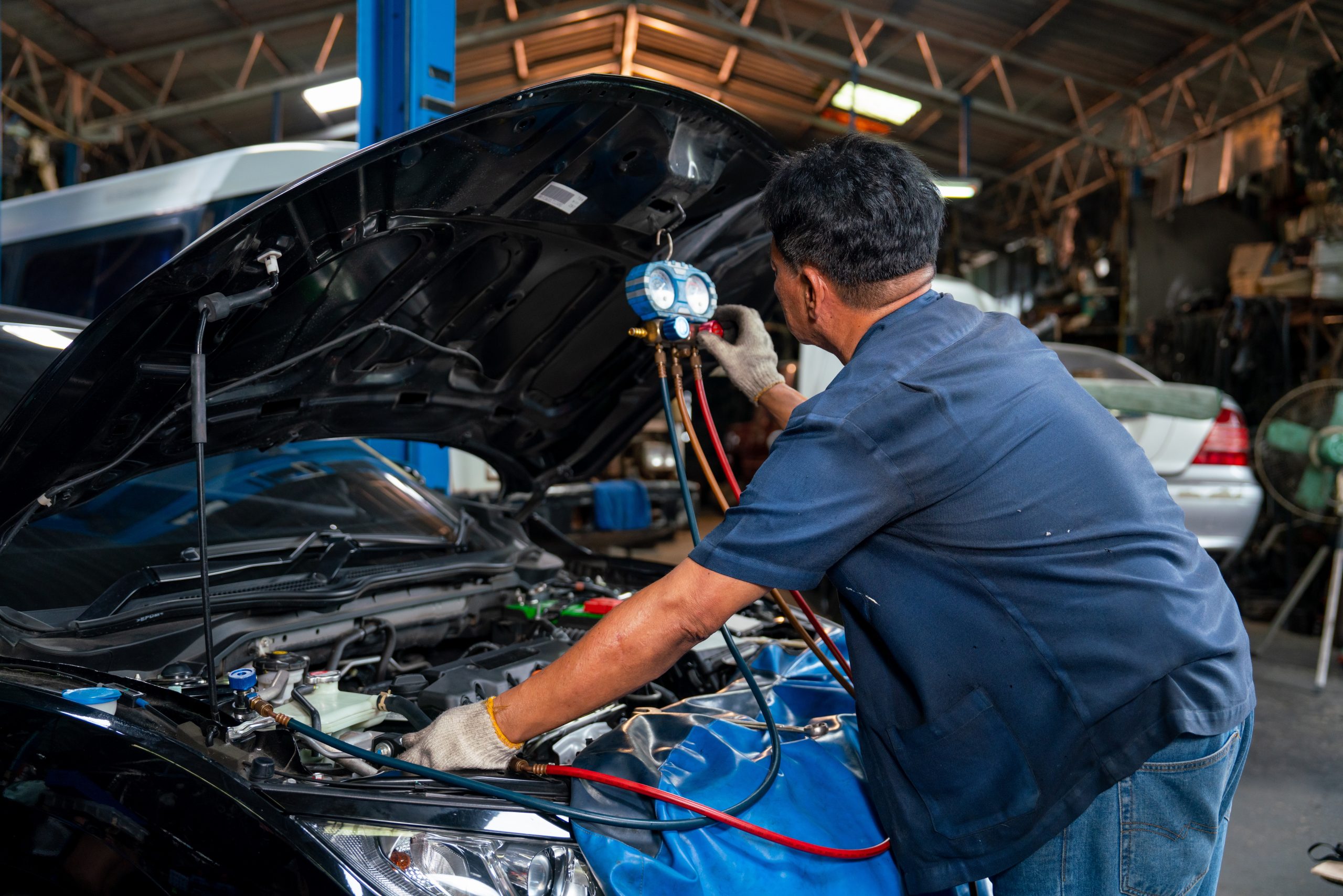
That cold to warm cycle often points to an AC refrigerant leak, especially when the air starts icy and then fades after a few minutes. Therefore, noticing the timing of the temperature change can help you explain the problem clearly when you book service.
What the cold then warm cycle usually means
Your AC system depends on the right refrigerant level to absorb heat and release it outside the vehicle. However, when refrigerant drops, the system may still cool at first because pressure is temporarily within range. After that, the pressure falls too low, and the evaporator can no longer pull heat out of cabin air the same way.
In many cars, the system will also protect itself. Consequently, the compressor may cycle off to prevent damage, which feels like “cold for a bit, then warm.” That is to say, the pattern is often more important than the exact vent temperature you felt once.
AC refrigerant leak Pattern: the timing clues drivers notice
If you are trying to describe the issue, pay attention to repeatable timing. For instance, the air may blow cold for 2 to 10 minutes, then slowly turn warm at idle or during city driving. Meanwhile, you might notice it cools again briefly after you rev the engine or get moving, but the relief does not last.
Another common sign is that the system cools better in the morning and worse in the afternoon. Therefore, higher outside temperatures can make a low charge feel much more obvious. In addition, if the air turns warm faster on hot days, that trend supports the low refrigerant idea.
Why it gets worse when you stop at lights
At idle, airflow across the condenser drops, so the system needs everything else to be healthy to keep pressures stable. However, with low refrigerant, that small loss of airflow can push the system over the edge. As a result, you feel warm air while stopped, then cooler air again when driving, even though nothing “magical” changed.
Why it sometimes feels fine on the highway
At highway speed, airflow is strong, so pressures can look more normal for longer. Moreover, the compressor stays in a happier operating zone, so it may cool until the system heat loads up again. In other words, speed can hide an underlying leak for a while.
Other problems that can mimic a leak
A leak is common, but it is not the only cause of this exact symptom. For example, a weak condenser fan, a failing pressure sensor, a sticking expansion valve, or a compressor clutch problem can create similar cycling. However, those issues usually leave different clues, such as odd fan behavior, inconsistent cycling, or changes tied to electrical loads.
That is why automotive computer diagnostic checks matter when the symptom is intermittent. Therefore, reading live data and checking commanded compressor operation can separate a control issue from a true low charge problem.
How Airdrie Automotive Services Ltd. confirms the leak, not just guesses
Airdrie Automotive Services Ltd. starts with a practical inspection and performance check because “topping up” without finding the cause usually brings the same problem back. Consequently, the process focuses on pressure readings, vent temperature behavior, and signs of oil residue around fittings and hoses.
Next, technicians may use dye or an electronic leak detector to locate the exact source. In addition, the system may be checked under different conditions, such as idle, higher RPM, and with the condenser fan operating. We document what we find so you know why a repair is recommended, not just what part gets replaced.
If your AC flips between cold and warm, booking automotive AC repairs helps get the system tested correctly before the leak grows. Therefore, you avoid repeated recharges and reduce the risk of compressor damage from running low.
Simple things you can check before your appointment
Firstly, notice whether the issue happens only at idle, only after long drives, or in every situation. Secondly, listen for the compressor clicking on and off rapidly, because fast cycling can align with low pressure. Moreover, check if the cabin air filter is clogged, since weak airflow can make cooling feel inconsistent even when the system is working.
Also, watch for electrical hints like the condenser fan not running when the AC is on. However, electrical problems should be tested safely, so it is smarter to have auto electrical repairs support the diagnosis if fan control or sensor signals look suspicious.
Preventing repeat AC issues through routine care
Small leaks can start as slow seepage at seals and fittings, especially as components age. Therefore, routine inspections and seasonal checks reduce surprises when the first heat wave hits. In addition, keeping the cooling system, belts, and fans in good shape supports stable AC pressures.
If you want fewer mid summer breakdown style problems, car maintenance visits are a simple way to catch early wear. Meanwhile, if you need a trusted shop for follow up service and clear explanations, Airdrie Automotive Services can help you sort out the real cause and fix it properly.
FAQs
How do I know if it is really a refrigerant leak?
If the AC starts cold and fades warm in a repeatable pattern, that supports an AC refrigerant leak. However, proper testing with pressure readings and leak detection is the only way to confirm the source.
Is it safe to keep driving if the AC turns warm?
Driving is usually fine, but the AC system may suffer if the compressor keeps cycling under low charge. Therefore, it is better to book service soon so a small leak does not become a bigger repair.
Why does the AC cool better while driving than at idle?
At speed, airflow across the condenser increases, so the system can manage heat better. However, when refrigerant is low, idle conditions expose the weakness faster, which is why the air turns warm at lights.
Will a recharge fix the problem permanently?
A recharge can restore cooling temporarily, but it does not repair the leak. As a result, the symptom often returns, sometimes quickly, unless the leak source is found and repaired.
What usually leaks in a vehicle AC system?
Common leak points include O rings, service valve cores, condenser damage from road debris, and hose crimps. In addition, seals can dry over time, which allows slow refrigerant loss.